
Employee advocacy helps people share relevant expertise and perspective through their professional networks. Social selling applies professional relationships, account knowledge, and useful conversations to sales work. In manufacturing, the same person may contribute to both, but the expectations should fit their role.
An applications engineer can help buyers understand a technical tradeoff without being responsible for prospecting. A salesperson can learn from that explanation, discuss its relevance with an account, and involve the engineer when technical depth is needed. Clear responsibilities make that collaboration easier.
Give expertise a purpose
Advocacy is useful when employees have knowledge buyers would benefit from seeing. A service technician understands what makes maintenance difficult. A quality leader can explain the questions a supplier should be prepared to answer. A product manager can discuss how application requirements affect a selection decision.
These contributions can help readers understand the company through the judgment of its people. They can also serve professional learning, recruiting, or partner relationships. Decide which purpose matters for the participant instead of judging every contribution by the number of leads it creates.
Marketing can support the employee with editing, approved evidence, and audience context. It should leave the experience and opinion with the person whose name appears on the contribution. The employee advocacy program guide explains that support in more detail.
Give sales participation an account focus
A salesperson needs to understand the account and the people involved in buying. For a packaging line, that may include production, engineering, maintenance, procurement, and leadership. Their concerns differ, even when they are discussing the same equipment.
C2 Connections helps the seller develop a relevant network with a reason for each relationship. C4 Conversations helps them participate usefully, ask appropriate questions, and recognize when a private exchange or meeting would help.
Posting alone does not provide account understanding. A seller should listen to what people discuss, relate it to the account's situation, and avoid assuming that a reaction indicates buying intent. A technical question may justify a helpful answer long before it justifies a meeting request.
Give every role a practical application
Train sellers, leaders, marketers, and experts in the same 5C Method using examples that fit their contribution to the business.
Book a 30-Minute CallUse one method with different emphasis
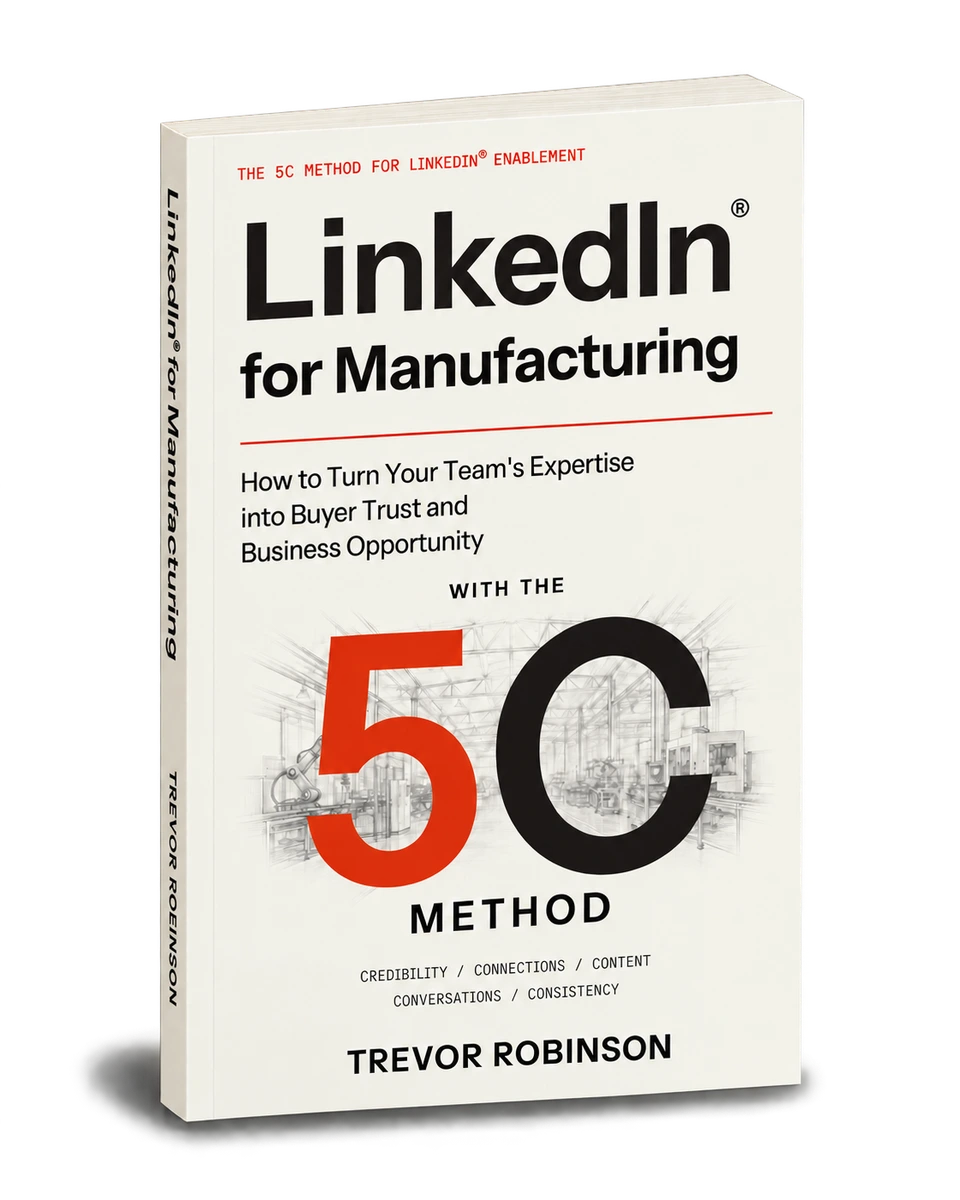
The 5C Method applies to both advocacy and social selling. C1 Credibility makes each person's experience understandable. C2 Connections creates a relevant professional audience. C3 Content turns knowledge into useful explanations. C4 Conversations develops meaningful exchanges, and C5 Consistency helps the work continue.
The emphasis changes with responsibility. An engineer may spend more time explaining decisions and answering technical questions. A seller may spend more time researching accounts and developing relationships. A leader may contribute a market perspective grounded in decisions they actually make.
Training should respect those differences. Have experts practice explaining a difficult concept clearly. Have sellers practice responding to a buyer's question with useful context. Give everyone clear guardrails, accurate profiles, and support for a routine they can maintain.
Make the collaboration helpful to buyers
Consider a manufacturer discussing conveyor selection for a washdown area. An engineer could explain how the cleaning process affects design choices. A seller could use that explanation to understand which questions matter to an account already discussing a project.
If a buyer asks about a specific operating condition, the employee can answer within their expertise or ask whether an appropriate colleague should join. A sales handoff should include the buyer's question and the context of the exchange. Requiring the buyer to repeat everything wastes the value of the original conversation.
Agree internally on who responds when several employees know the same account. Give experts a way to contribute without taking over sales follow-up. Give sellers access to current, approved explanations without turning every expert contribution into an outreach campaign.
Judge contributions by their purpose
For an expert, look at whether relevant readers understand the explanation, ask thoughtful questions, or use the material in a useful discussion. For a seller, look at the quality of account knowledge, relationships, replies, and commercial conversations. Document specific business connections rather than assuming all attention has sales value.
Review the workload as well. Experts need time and editorial help; sellers need coaching on relevance and follow-up. Shared support can make the work easier, but the expected contribution should remain clear to each person.
The sales-team training guide develops the commercial application. The company page and employee profiles guide shows how individual contributions can work alongside official company communication.