
A seller can know every LinkedIn feature and still struggle to start a useful conversation with a plant manager. Effective LinkedIn training for manufacturing sales teams connects the platform to the work sellers already do: understand accounts, explain technical value, develop relationships, and help buyers make decisions.
The practical test is what changes after the session. Can the seller explain why a particular contact matters, contribute something useful, and choose an appropriate next step? Those are skills a manager can develop through real account work.
Train around real accounts and buying decisions
Start with an account the seller wants to understand better. An automation purchase may involve production, engineering, maintenance, purchasing, and finance. Ask the seller to identify people whose responsibilities connect to the application, rather than searching only for a senior title.
Use a current buyer question as the practice material. For an equipment supplier, that might be how to compare a retrofit with a replacement. For a component manufacturer, it could be how application conditions affect material choice. The lesson becomes useful when the seller can explain a relevant consideration without turning every interaction into a product pitch.
Keep the practice close to the team's responsibilities. A territory seller may need to develop local industry relationships. A key-account manager may need greater awareness of a buying group. A technical salesperson may need help turning an excellent verbal explanation into a readable post.
Teach the connected skills in the 5C Method
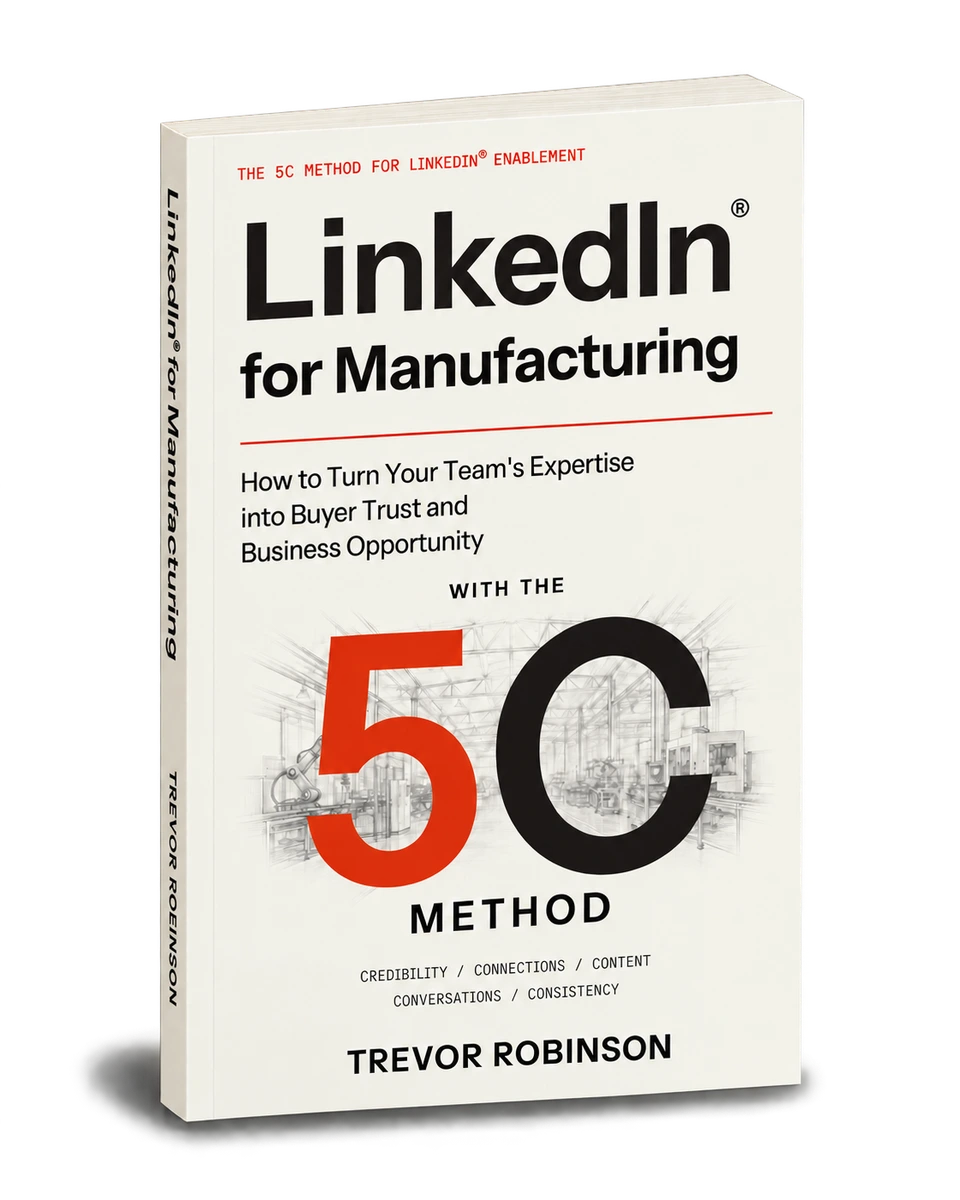
The 5C Method gives a sales team a shared philosophy for using LinkedIn. Credibility helps a visitor understand the seller's relevance. Connections focus attention on the right people. Content makes useful expertise visible. Conversations build relationships. Consistency makes the work practical enough to maintain.
Teach those skills through actual decisions. Improve the seller's headline and Featured section using material a buyer would find useful. Search for people at an account and discuss who belongs in the network. Develop a post from a recurring question. Write a comment that adds technical context, then discuss when a direct message would be welcome.
A seller does not need to publish frequently to apply the method. Good judgment also means recognizing when to listen, when to ask a question, and when there is no reason to contact someone yet.
Give sellers time to practice and get feedback
Leave room in the session for people to work on their own accounts and language. Watching a trainer improve a sample profile is helpful; improving your own buyer-facing profile reveals the questions that need coaching.
Ask people to explain their choices. If a seller selects a maintenance manager, what makes that person relevant to the application? If they draft a message, what happened that makes the message timely? Feedback should improve the reasoning as well as the wording.
Use unfinished work. A vague headline, a comment that sounds like a brochure, or a message that asks for too much gives the group something concrete to improve. A polished demonstration alone can hide the decisions involved.
Make LinkedIn training useful in the next sales week.
Build training around your accounts, buyer questions, and the habits your managers can support.
Book a 30-Minute CallSupport the work after the session
Agree where LinkedIn fits into existing account preparation and follow-up. A seller preparing for a plant visit can review relevant people and recent discussions. After a trade show, they can reconnect with someone they actually met and refer to the conversation. These moments make the activity easier to remember.
Managers can ask to see one relevant example in a regular coaching conversation. Discuss what the seller learned, what they contributed, and whether a reply needs attention. This is more useful than reviewing a tally of messages without reading any of them.
Make support available when people encounter uncertainty. A short working session can help a seller revise a technical explanation or decide how to follow up. Repeated, specific feedback matters more than another presentation covering the same features.
Choose training that matches the team's need
A focused workshop fits a clear skill gap, such as improving profiles or writing relevant messages. A team that understands the basics but rarely applies them needs supported practice and manager involvement. A company coordinating leaders, sales, marketing, and technical experts needs agreement on ownership, shared material, and guardrails.
Before choosing a format, look at a few actual profiles, posts, and messages with participants. Ask where the work becomes difficult. That evidence helps you choose a useful starting point and avoid spending the session on skills people already have.
Look for better sales work
Review whether sellers can find relevant people, explain their expertise clearly, and send messages with a credible reason for reaching out. Then examine the responses: useful exchanges, new account knowledge, introductions, or meetings connected to those conversations.
Keep commercial expectations proportionate to the sales cycle. A meaningful exchange with a project engineer can matter before an opportunity exists. Use LinkedIn analytics alongside sales context, and investigate unanswered messages by reviewing relevance and timing. The training earns its place when the team's everyday work becomes more informed and useful.