
LinkedIn analytics help a manufacturing team understand whether its expertise is reaching useful audiences and prompting relevant responses. The numbers become more valuable when they answer a practical question: are we reaching plant leaders, are our explanations useful, or are people starting conversations about the problems we solve?
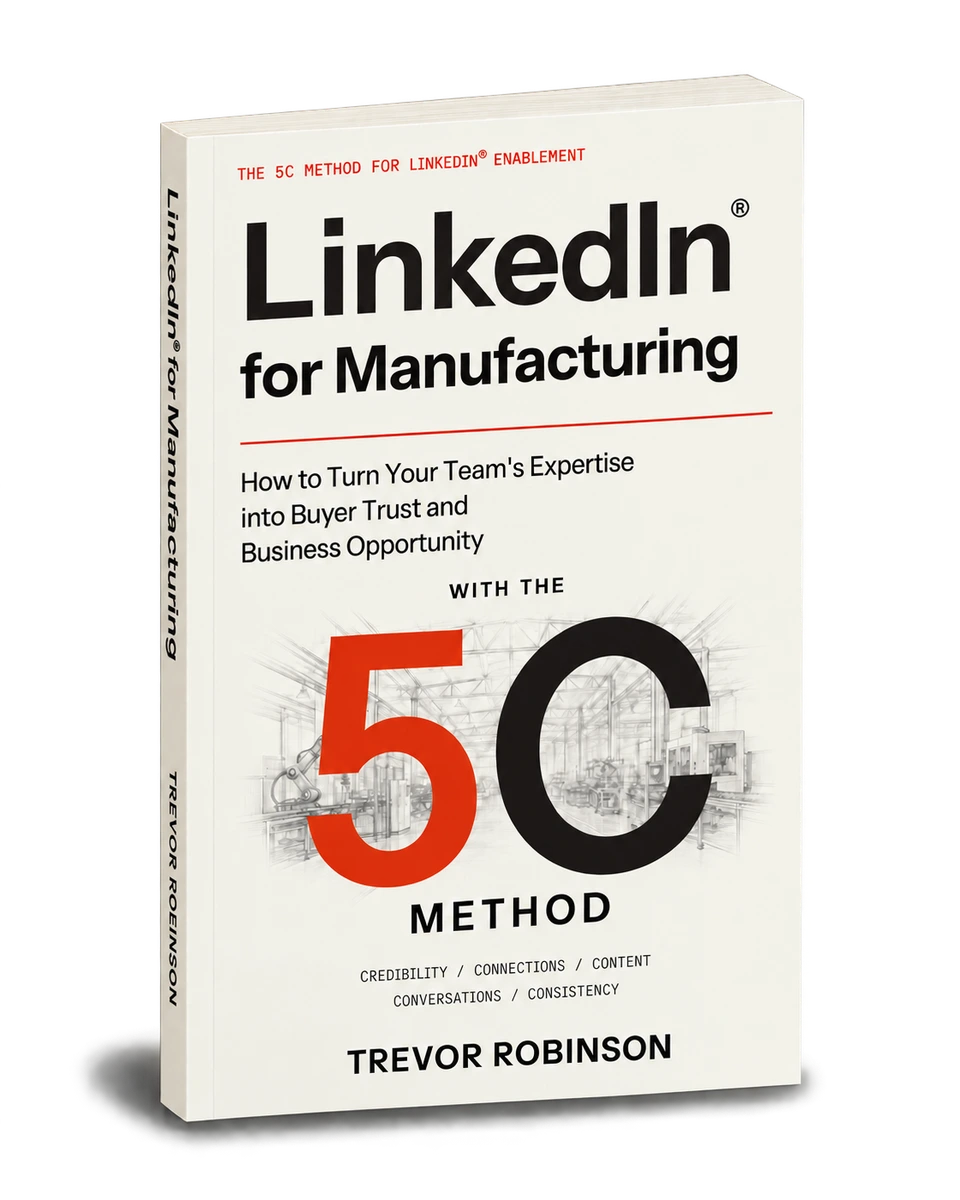
Begin with the question the team needs to answer. Collecting more data will not resolve an unclear purpose, and a rise in impressions does not automatically tell sales what to do next. In the 5C Method, distribution and analytics belong within C3 Content, while meaningful replies connect that work to C4 Conversations.
Understand what the numbers count
Impressions count how often a post appears. Members reached estimates the distinct members and Pages that saw it, excluding repeat views. These measures describe distribution; they do not establish that someone read the explanation or intends to buy.
Available post analytics also include reactions, comments, reposts, saves, sends, and audience demographics. LinkedIn describes the figures as estimates and limits demographic reporting to protect member privacy. Use the current LinkedIn post analytics definitions when interpreting a report.
Keep comparisons consistent. A total for a month with many posts answers a different question from the response to an individual post. Record the period you are examining and compare posts after a similar amount of time has passed.
Look for the audience the team needs
A precision component supplier might want to reach design engineers and purchasing specialists in particular industries. A factory automation team might care about operations, controls engineering, and maintenance. Agree which roles matter before deciding whether the audience looks useful.
Use the demographic information available alongside visible comments and conversations. A broad industry label may hide very different applications. A relevant job title helps, but it does not prove that the person works on the problem your company addresses.
If peers and vendors dominate the visible response, examine the subjects and the employee's network. Highly technical discussion may be valuable, but the team may also need explanations of implementation, service, or procurement questions. Improve audience relevance through content choices and deliberate connection building.
Read the substance of the response
Look beyond the count of comments. “Great post” offers less information than a maintenance leader asking how a recommendation changes under washdown conditions. A detailed question can reveal an application concern worth addressing in a follow-up explanation.
Saves and sends can suggest that a reader found something worth keeping or sharing. They do not explain the reason. Read them alongside the subject, intended audience, and conversations the author actually receives.
Keep a few examples of relevant responses for team discussion. An approved excerpt from a buyer question or a seller's account note can explain why a modestly distributed post was useful. Remove personal or sensitive detail that the wider team does not need.
Help your team use LinkedIn evidence well.
Connect participation, audience relevance, and useful conversations to decisions your team can act on.
Book a 30-Minute CallCompare similar work before changing direction
An executive announcement, a technical explanation, and a service engineer's event reflection serve different purposes. Comparing their raw reach can reward the largest existing audience instead of the most useful work.
Review several contributions from the same author or on a similar subject. Look for repeated patterns. If practical explanations consistently attract relevant questions, develop that subject further. If a broad opinion attracts attention from unrelated audiences, decide whether that visibility serves the company's purpose.
For a team, examine how widely participation is spread. One highly active leader can make the total look healthy while other participants are struggling. Discuss those differences with the team rather than assuming that low activity reflects low effort.
Connect LinkedIn activity to sales context
Ask sellers to capture useful context in the place they already record account work. If a buyer mentions an engineer's post during a call, note the subject and how it informed the discussion. If a direct exchange leads to a meeting, record that connection.
Be precise about the claim. “The buyer referenced the maintenance post before discussing a retrofit” is stronger evidence than “LinkedIn generated the opportunity” when the account also involved service visits, events, and existing relationships.
This distinction matters in long industrial sales cycles. LinkedIn may contribute to familiarity or understanding well before a project is funded. The employee advocacy ROI guide explains how to connect that evidence with commercial outcomes.
Use the evidence to make a useful change
Choose a change that follows from what you observed. If technical posts reach relevant people but attract confused questions, improve the explanation. If the audience is mostly unrelated, reconsider topics and network relevance. If employees struggle to contribute at all, address time, confidence, or support.
A strong response without further conversation deserves a closer look at the path from engagement to useful dialogue. Does the profile make the person's expertise clear? Is there a relevant reason to follow up? Analytics can help identify where to investigate. The decision still depends on the people, the application, and the conversation.