
A post can receive enthusiastic reactions without producing a single enquiry. That does not automatically mean the content failed. Some readers are learning, some are colleagues showing support, and some may have no need for your company's services.
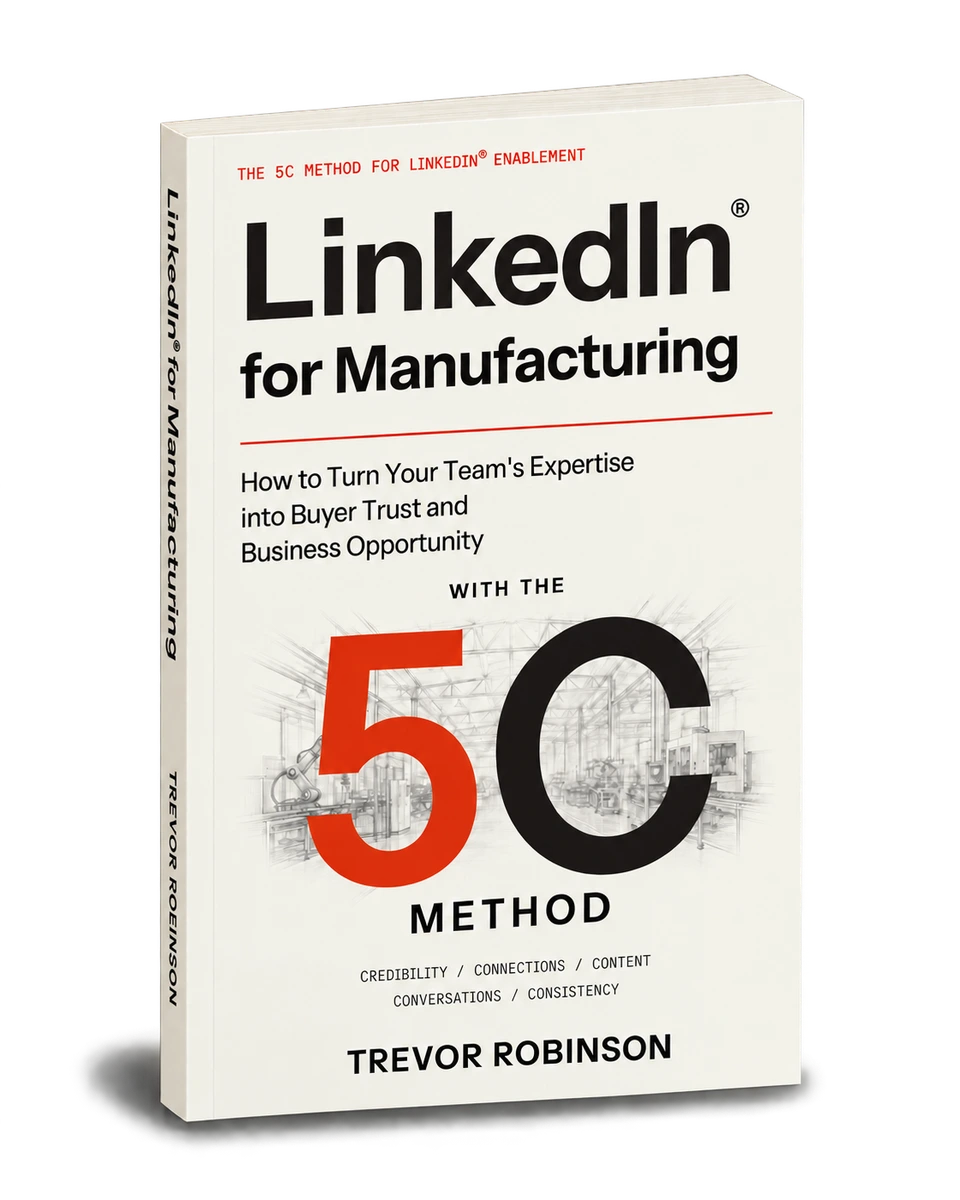
The useful question is whether your content reaches relevant people and helps a professional relationship develop. In the 5C Method, C4 Conversations connects public participation with appropriate direct discussion. C1 Credibility, C2 Connections, and C3 Content influence whether that discussion makes sense in the first place.
C2 Connections: Network Quality & ReachLook at the people behind the reactions
Read recent comments and look at the professional roles of people responding. Are they potential customers, people who influence buying decisions, partners, industry peers, or your own colleagues? All can be valuable relationships, but they do not represent the same commercial context.
A post about sales motivation may attract salespeople. A post about reducing ambiguity in an equipment specification may attract engineers and project leaders. If your intended audience never appears in the discussion, review your topics and connections before changing the sales message.
Include relevant technical and operational people in your definition of the audience. A maintenance specialist may never complete a lead form, yet their questions can matter to an equipment decision. Use what people actually say and do to understand relevance.
C1 Credibility: About & ExperienceLet interested readers understand your work
Someone who finds a post useful may want to learn more about the author. Make your profile consistent with the expertise the post demonstrates. A clear headline, relevant experience, and useful evidence can explain how the subject connects to your work.
For example, a post about changeover preparation should lead to a profile that makes the author's manufacturing experience understandable. If the profile says only “passionate about innovation,” readers must guess whether the person sells equipment, manages production, or advises on implementation.
Review any resource or company page you invite people to visit too. Keep the language specific to the problem they were exploring. The profile optimization guide explains how to make that professional context easier to recognize.
C4 Conversations: CommentingRespond to the substance of a comment
A reaction gives you little information about the person's needs. A detailed comment can give you a real subject to discuss. Respond to that subject instead of treating every interaction as a prospecting trigger.
Suppose an engineering manager asks whether the maintenance-access advice in your post applies to a compact cell. Explain which parts depend on the cell layout and what you would need to know before offering a specific answer. That response can help both the commenter and other readers.
Ask a follow-up question only when it helps clarify the issue. “Is access limited by guarding or adjacent equipment?” is more useful than a generic invitation to “tell me more.” Keep the conversation public while the information is appropriate to discuss there.
Build confidence in useful conversations
Help your team respond to interest with relevant questions, clear explanations, and appropriate next steps.
Book a 30-Minute CallC4 Conversations: Direct MessagesMove to a message when there is a reason
A direct message should continue an existing subject or introduce something clearly relevant. If someone requests a resource, send it. If their question requires application details they should not share publicly, explain that and offer to continue privately.
Do not interpret a like as permission for an immediate meeting request. Repeated engagement can suggest familiarity, but it still does not establish a purchase requirement. Let your message reflect what you actually know.
A useful continuation might be: “You asked about access around a compact welding cell. I can point you to a public application example if that would help.” Make sure the resource exists and addresses the question. Give the person room to decline or leave the conversation there. The message guide covers common reasons these conversations stall.
C4 Conversations: Warm Signals & MeetingsSuggest a meeting when it serves a clear purpose
A request for specific advice, a disclosed project, or a discussion that needs several people may justify a meeting. Explain what the conversation would cover and why a live discussion would help. An engineering review of installation constraints is a clearer proposition than an unexplained “quick chat.”
Be equally comfortable with a smaller next step. The person may need an answer, a colleague's contact, or time to discuss the subject internally. Pressing for a meeting can interrupt a useful relationship.
Review what the content and conversations actually produced: relevant questions, introductions, technical discussions, meetings, and opportunities where there is evidence of a connection. Keep observed contribution separate from assumptions about revenue. This gives the team a better basis for improving than reaction counts alone.