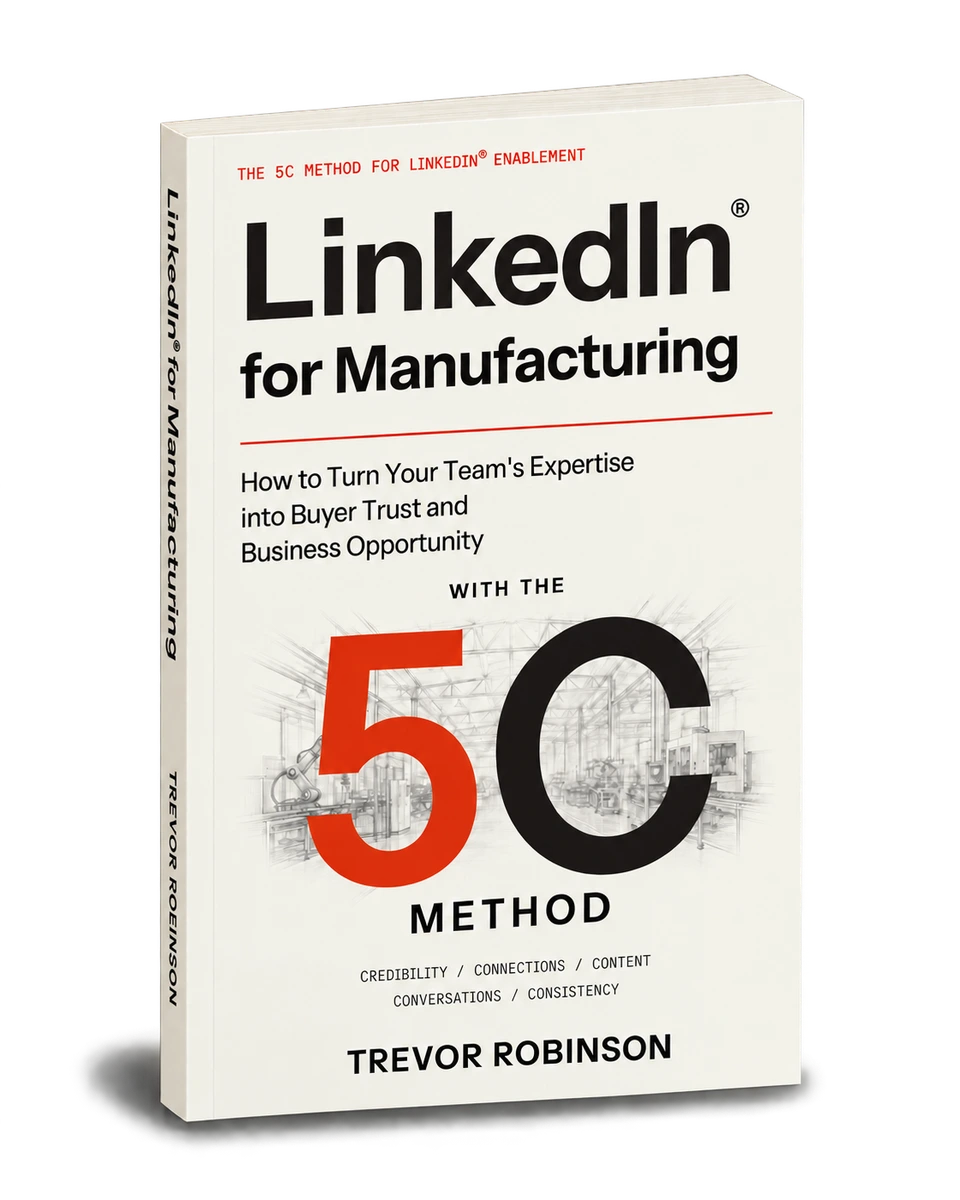

A useful employee advocacy policy answers the questions people face while participating on LinkedIn. Can an engineer discuss a recurring application problem? Can a salesperson share a photograph taken during a plant visit? Who checks a statement about equipment performance? This is part of C5 Consistency in the 5C Method: team habits and guardrails that help employees participate confidently.
For manufacturing teams, these decisions depend on the details. A seemingly ordinary image can show a customer name, an unreleased part, or a production schedule. The policy should make those details easier to recognize and provide someone who can resolve uncertainty.
Explain the participation you support
Begin with the purpose of professional participation. Employees can explain what they know, contribute to industry discussions, and help buyers understand practical decisions. Describe the support the company provides, including training, editing assistance, approved reference material, and time to practice.
Be clear about who is speaking. An employee describing their own experience has a different role from a designated spokesperson announcing company news. State who handles official statements, media requests, and sensitive incidents. When employees discuss their employer's products, encourage plain language that makes the relationship clear.
Give employees ownership of their contribution. Company guidance can define facts and boundaries while allowing people to decide how to explain their experience. Copying an approved caption does not remove the need to understand and stand behind its claims.
Make confidentiality recognizable
Use examples from actual manufacturing work. A photograph beside a machining cell may contain a drawing on a screen. A trade-show image may include someone who has not agreed to appear. A story about a difficult installation may identify the customer through location, equipment, and timing even when the name is omitted.
Explain how employees should handle customer names, logos, quotations, site images, commercial details, and unpublished specifications. Identify where existing permissions are recorded and who can confirm whether the intended use is covered. A public relationship does not answer every question about sharing project details.
Teach employees to inspect the whole image, including backgrounds and reflections, before proposing it for publication. Provide approved alternatives when a useful explanation does not need a customer-specific photograph. A general discussion of a tradeoff may communicate the lesson without exposing the project.
Help your team use sound judgment
Practice the 5C Method with the technical subjects, buyer questions, and publishing decisions your people encounter.
Book a 30-Minute CallKeep technical claims grounded
A claim about cycle time, material suitability, energy use, or equipment life needs its relevant conditions. Encourage employees to explain those conditions in language a buyer can understand. A result from a particular application should not become a promise about every installation.
Name the technical reviewer for unfamiliar or consequential claims. Give that reviewer the source material and enough context to judge what the post says. Marketing can help with clarity, but it should not supply certainty the evidence does not support.
Keep public explanations current. If a product specification or approved claim changes, make sure employees can find the updated source. When a reader points out an error, the author should know whom to contact and how to arrange a correction. Calm, accurate responses support C1 Credibility.
Define responsible AI assistance
Under C5 Consistency, tools, templates, and AI should help people sustain good work. Define which tools the company permits and which information employees may use in them. Customer notes, quotations, drawings, employee information, and unpublished commercial details need explicit handling rules.
Useful AI assistance might include organizing approved notes or suggesting a clearer way to explain a public technical concept. The author still needs to check each claim, confirm the example reflects their experience, and remove language they would not use.
Do not allow generated anecdotes, testimonials, or results to appear as real experience. An employee's name on a post should mean they understand and accept the substance. The manufacturing content strategy guide explains how to build useful material from real work.
Make help easy to reach
Name a contact for publishing questions and a backup when that person is unavailable. Explain what information a reviewer needs and how quickly employees can reasonably expect an answer. Unanswered questions can stop participation long after the original issue has passed.
Discuss realistic situations during training, such as a buyer asking about an unreleased capability or a colleague proposing a factory photo. Use disagreements to improve the wording. Have the appropriate company owners review the policy alongside existing confidentiality, security, and communications requirements.
Revisit the guidance when products, responsibilities, or working practices change. Connect it to the advocacy program and listen for recurring questions when reviewing participation. Clear answers should become part of normal team support.