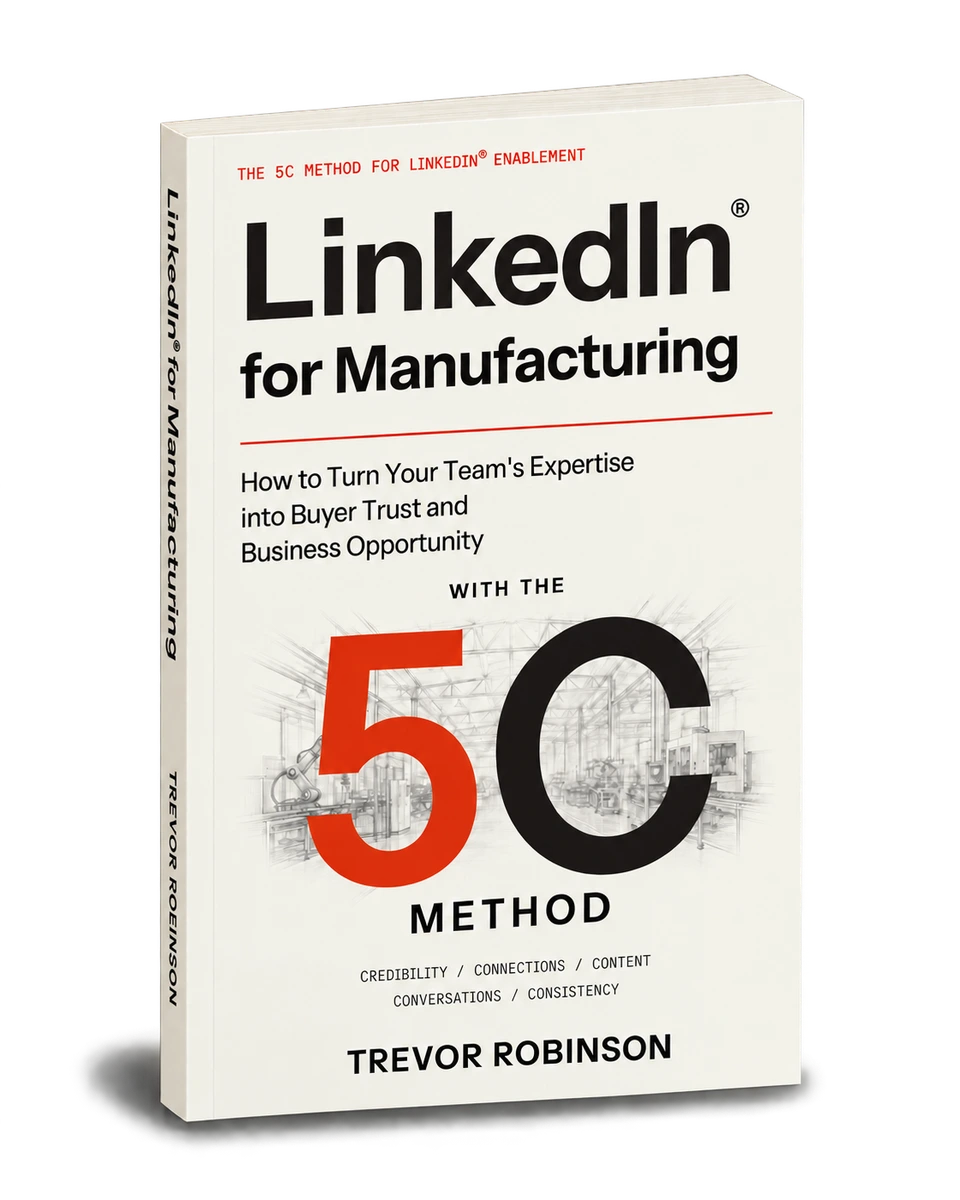

Employee advocacy can start with genuine interest and still fade. People return to quoting jobs, solving application problems, visiting customers, and keeping production moving. If LinkedIn participation depends on spare time and repeated reminders, it becomes easy to postpone. C5 Consistency in the 5C Method focuses on the routines and team support that make participation sustainable.
Declining participation is a reason to examine the experience employees are having. A service engineer may have plenty to say but no clear permission to discuss site work. A salesperson may be posting regularly without reaching relevant buyers. Those situations need different support.
Understand what stopped the work
Ask participants about the last contribution they intended to make. What was the subject? Where did they get stuck? What happened when they asked for help? A specific example is more useful than a general answer about being busy.
Speak with people who are participating and people who have stopped. Listen for differences between roles. Engineers may worry about technical precision; leaders may struggle to choose a useful point of view; sellers may need help connecting activity to live account questions. Avoid assuming a single content calendar will solve all of those problems.
Review the workload with managers too. If the team has been asked to contribute while every working hour is already committed, enthusiasm cannot resolve the conflict. The manager needs to make room or reduce the expectation.
Connect participation to real work
Employees need a reason to participate that fits their job. An applications engineer may value helping buyers ask better specification questions. A service leader may want to explain avoidable maintenance problems. A sales manager may want their team to become familiar to people in relevant accounts.
Use those purposes to select the work. A useful contribution could be an explanation, a comment on an industry discussion, or a reply to a question. Requiring everyone to publish the same kind of post overlooks the different ways people can be helpful.
C3 Content starts with expertise the employee already has. In a regular team meeting, ask which question came up more than once this week. Discuss whether the answer could help other buyers, what context it needs, and which details must stay private.
Make participation easier to sustain
Help your team practice the 5C Method with subjects from their own work and support that fits their responsibilities.
Book a 30-Minute CallGive help where people hesitate
When an employee has an idea but struggles to write it, an editor can ask questions and help organize the answer. For example, a tooling specialist might explain why a drawing leaves an important application detail unclear. The editor can improve the explanation while leaving the technical judgment with the specialist.
When the hesitation concerns permission, more writing advice will not help. Name a reviewer who can answer the actual question. Make it clear how to handle customer details, factory photographs, performance claims, and unpublished product information. The employee advocacy policy guide covers these everyday decisions.
Employees should have a chance to practice before publishing and to choose a contribution they are comfortable owning. If someone prefers explaining an idea in conversation, marketing can help capture it. The final wording still needs the author's review.
Build consistency into existing routines
C5 Consistency includes daily routine, tools and AI, and team habits and guardrails. Start with the time and resources already available. An existing sales meeting can surface buyer questions. A short editorial conversation can help an expert develop an answer. A manager can ask what useful discussion followed.
Keep the routine light enough to survive a busy week. Someone preparing for a trade show may focus on relevant connections and conversations. Someone traveling between plants may capture an idea for later. Useful participation can vary with the work without disappearing altogether.
Use technology where it removes effort the team actually experiences. A shared place for approved reference material can help. A new tool that needs constant feeding may create another task. AI can assist with organization or wording when company data rules allow it, but the employee must verify the content.
Recognize useful contributions
Give feedback on what helped a reader. An explanation that clarifies a common selection mistake, a careful technical answer, or a relevant introduction deserves attention even when it attracts a small audience. Public contests based on posting volume can distract from that purpose.
When employees explain what would help, make a visible change and check whether it worked. If review delays were the problem, examine turnaround and clarity. If the audience was wrong, improve targeting. The program guide shows how these responsibilities fit together, while guidance for employees who hesitate to post addresses confidence and choice in more detail.