
When manufacturing employees will not post on LinkedIn, more reminders rarely explain the silence. An applications engineer may have plenty to say but worry about technical accuracy. A service specialist may assume everyday knowledge is too obvious to share. A salesperson may simply have no space for another task.
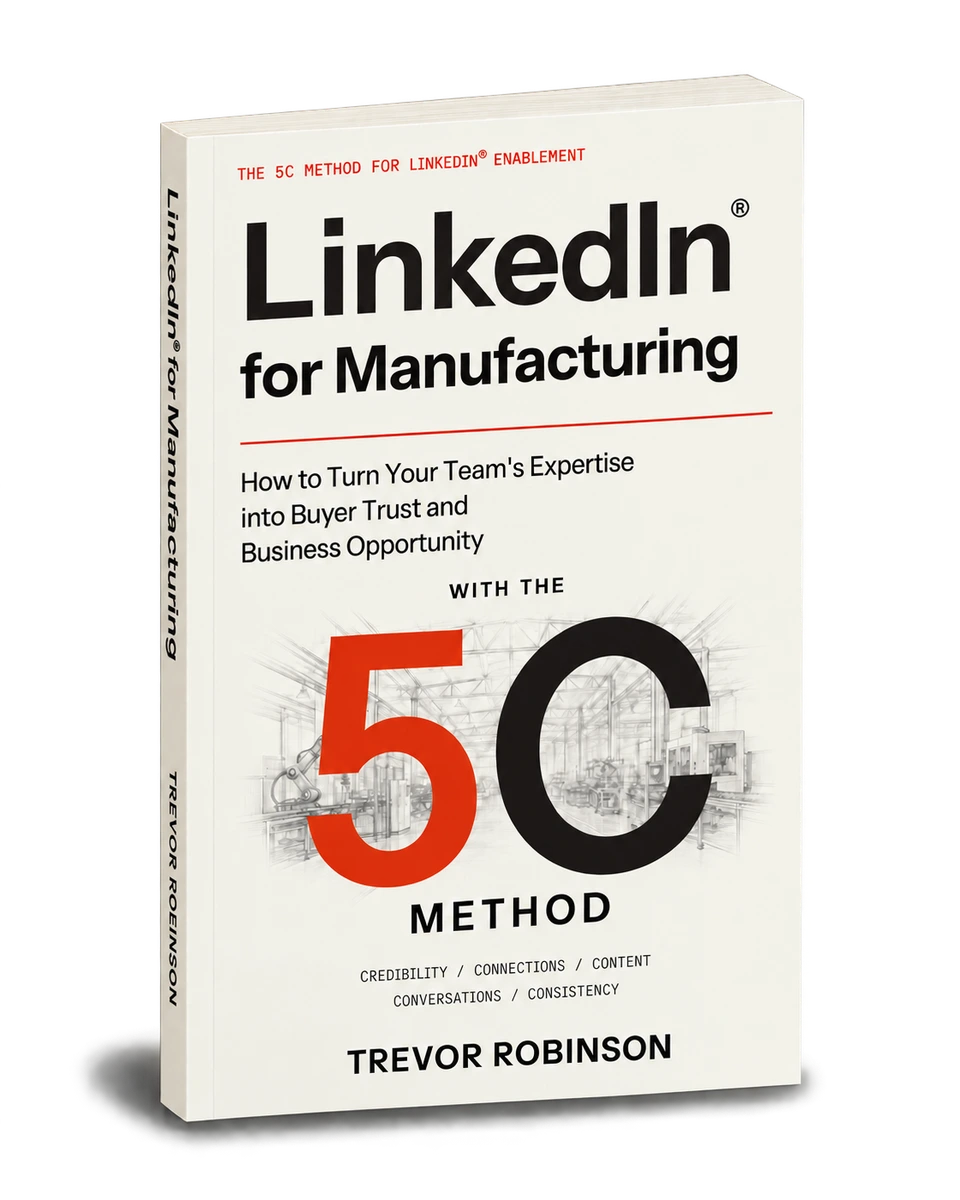
The useful response depends on what is getting in the way. Talk with people about their experience before changing the content calendar or buying another tool. C5 Consistency in the 5C Method includes the team habits and guardrails that make participation manageable.
Understand the hesitation before offering a fix
Ask what happens when the employee considers publishing. Do they get stuck choosing a subject, writing the first sentence, deciding what can be shared, or finding time to finish? Ask privately enough that they can answer honestly.
Someone who says “I have nothing to say” may mean “I do not think my knowledge is interesting.” Someone who says “I am too busy” may not see how LinkedIn helps their work. These answers require different support.
Also distinguish difficulty from preference. A person may value professional relationships while preferring to contribute through conversations, events, or internal expertise. A useful team program leaves room for those differences and keeps participation on personal profiles voluntary.
Help people recognize expertise in ordinary work
Ask an employee to explain something they regularly explain to customers or new colleagues. A field technician might describe what to prepare before a service visit. A quality engineer might explain why a drawing needs a clearer inspection requirement. A seller might discuss the information needed for a useful quotation.
Listen for the question behind the explanation. If customers keep asking whether a component will work in a particular environment, the useful post could explain which operating conditions affect selection. There is no need to invent a dramatic story.
Start with a small, complete contribution. A short comment adding relevant context to an industry discussion can feel more manageable than an original article. If the employee wants to publish, help them develop one idea from the questions and decisions they already encounter.
Make the boundaries clear enough to use
Vague warnings about confidentiality can make everything feel risky. Show employees concrete examples of what they can discuss and where a reviewer can help. Explaining a general maintenance consideration is different from describing a customer's recurring breakdown.
Use familiar situations when discussing company guardrails. A factory photo could include a visible production screen, customer part, whiteboard, or colleague who has not agreed to appear. Employees should know who can answer a question before they spend time preparing the post.
Make the review process proportionate. Routine educational material should not wait indefinitely because the right approver is unclear. Give people a named contact for questions about customer stories, technical claims, images, and unreleased information.
Help your team get comfortable sharing what it knows.
Build practical skills, clear guardrails, and support around the reasons your employees hesitate.
Book a 30-Minute CallReduce the effort of drafting
Give people a way to capture an idea while it is fresh. A few notes after a customer call or a short voice note after a demonstration can preserve the useful detail. Marketing can turn those notes into a draft for the employee to review.
Keep the employee's own language. Technical specialists often communicate more clearly when describing a real application than when asked to write “thought leadership.” Read the draft aloud together and remove language the person would never use.
AI can help shorten or organize approved notes, but the employee still needs to check every claim. Do not let a tool invent a project outcome, technical fact, or personal experience. Use company-approved tools and keep sensitive information within the company's rules.
Protected working time also matters. Asking employees to publish while treating every minute spent drafting as a distraction sends conflicting signals. Managers should make the agreed activity fit the workload.
Recognize useful contributions without creating pressure
Share examples of helpful explanations and thoughtful replies with the author's permission. Explain what made the contribution useful: it clarified a decision, answered a real question, or offered practical context. That gives colleagues something they can learn from.
Avoid turning the program into a competition for likes. An engineer writing for a narrow group of specialists and an executive with a broad network start from different positions. Public comparisons can reward audience size while discouraging the people whose expertise the company wants to make visible.
Offer support beyond publishing. An employee might contribute material to a colleague's post, take part in an interview, or answer an industry question. Those contributions can help the company share better information while the employee develops confidence.
Check whether the support is helping
Return to the original difficulty. Is the person finding ideas more easily? Do they know where to ask about a sensitive detail? Can they finish a useful contribution within the time available? Their answers tell you whether the support is practical.
Look for repeated participation that people can maintain, along with relevant responses from their audience. If employees contribute once and stop, investigate what became difficult after the first attempt. The broader adoption problem may involve manager support, unclear purpose, or workload rather than writing skill. Addressing that cause gives the team a better chance of continuing.