
Useful manufacturing employee advocacy gives people access to the expertise inside a company. An engineer can clarify a selection decision. A service specialist can explain how to prepare for a visit. A production leader can describe the thinking behind a better handoff.
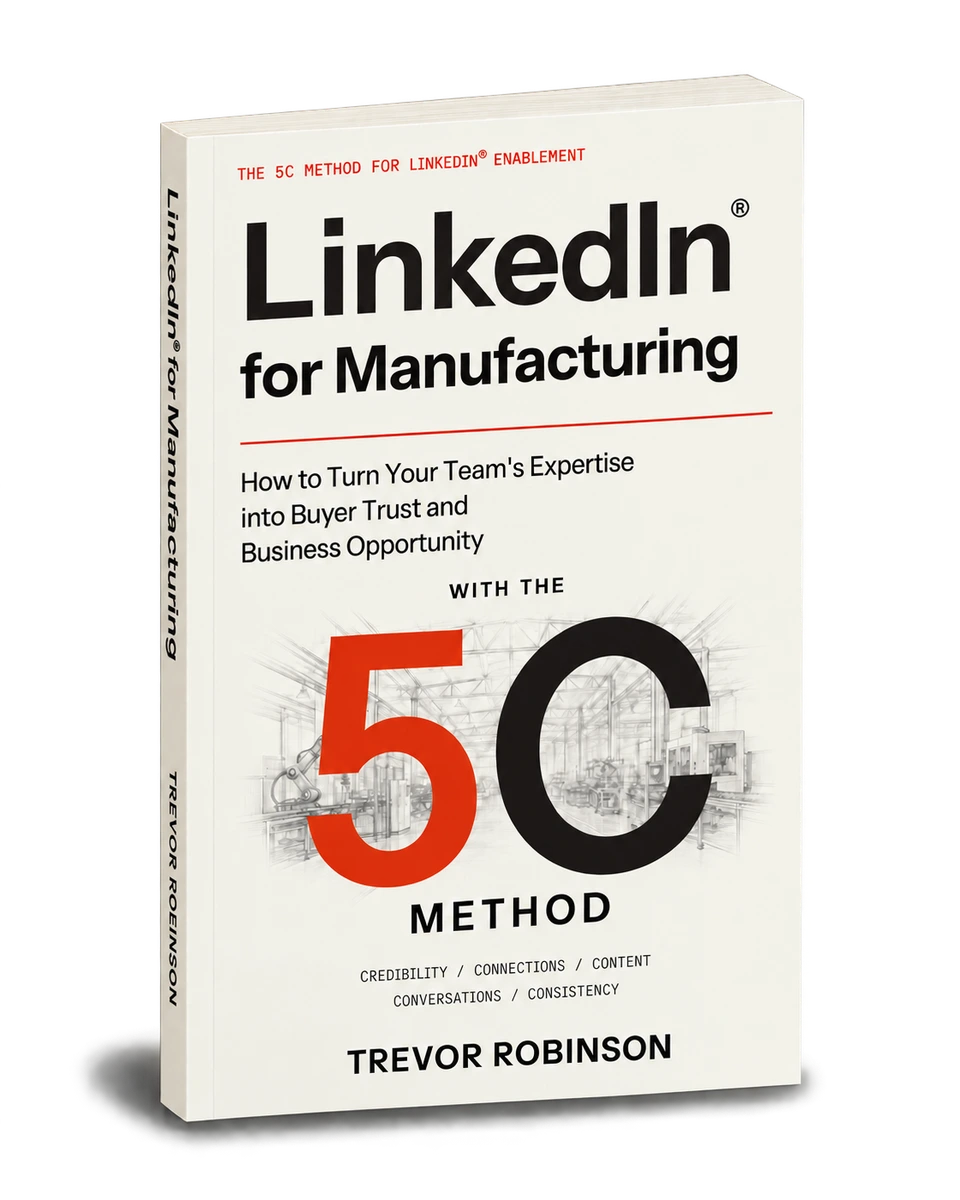
These 12 examples show ways employees can contribute from their own work. Choose the subjects that fit the person's experience and audience, then develop them in their own language. The value comes from the explanation they add. This is C3 Content in the 5C Method applied to everyday manufacturing expertise.
Answer practical manufacturing questions
1. An applications engineer explains a selection question
An engineer can explain why choosing a component requires an understanding of the operating environment. A post might discuss how temperature, cleaning requirements, or duty cycle changes the questions a supplier asks. Give the reader enough context to prepare for an application discussion. A simple photo of an approved demonstration component can make the explanation easier to follow without exposing a customer's design.
2. A service specialist helps customers prepare
A field service specialist can discuss what makes a site visit productive: a clear description of the problem, relevant equipment information, and access to the people who observed it. Explain why each detail helps the conversation. Keep the post focused on preparation appropriate to the employee's expertise and company guidance. Readers should finish with a clearer idea of what information to gather before contacting service.
3. A salesperson explains what improves a quotation
A seller can describe why a supplier asks about quantities, application conditions, documentation, or delivery needs. Instead of complaining about incomplete requests, explain how those details affect the response the buyer receives. This makes a routine sales conversation useful to purchasing and engineering readers. A short post can answer a common question while showing the seller's understanding of the application.
Explain the thinking behind decisions
4. A manufacturing leader discusses a capacity tradeoff
A leader can explain why adding a machine is only part of a capacity decision. Staffing, maintenance support, process stability, and downstream constraints may affect whether the investment helps. Choose a decision the leader knows well and discuss the conditions that change the answer. The post does not need a sweeping forecast. A clear explanation of an operating tradeoff gives peers something worth considering.
5. A quality specialist clarifies an inspection requirement
A quality specialist can explain why two people may interpret the same inspection request differently. Discuss the importance of clearly defined requirements using a general, approved example. Explain the practical question a buyer should resolve with the supplier. The contribution works because it makes an everyday source of confusion visible and helps both sides prepare for a more precise conversation.
6. A maintenance leader explains service access
A maintenance leader can discuss why equipment placement needs to account for future service work. Describe the planning conversation that should happen before a layout is fixed, without giving instructions beyond the employee's role. An approved demonstration photo can show the context. The useful point is how early coordination between engineering, operations, and maintenance can improve the decisions people make.
Help employees contribute in their own voice.
Build the skills and support that turn everyday manufacturing expertise into useful LinkedIn participation.
Book a 30-Minute CallAdd context to company news and events
7. A product specialist explains a new capability
When the company announces a capability, a product specialist can explain the application question it addresses. Discuss who might find it useful, the conditions that matter, and what buyers should understand before evaluating it. Reference the approved announcement for specifications. The employee's contribution is the practical context around the news, which gives readers a reason to spend time with the announcement.
8. An engineer shares a trade-show observation
After an event, an engineer can discuss a question that came up repeatedly in their own conversations. Explain what made the question interesting and how a technical team might approach it. Keep the observation within the experience available rather than calling it an industry trend. If a photo helps, use an approved image and give appropriate credit to the people or organizations featured.
9. A project team member explains a handover lesson
A project team member can describe the information operations needs when new equipment enters service. The post might explain why maintenance documentation, training ownership, or an agreed contact matters. Use an example the company can share, focusing on the lesson instead of naming a customer's difficulty. This gives readers a practical way to think about a part of implementation that can receive too little attention.
Make people and expertise visible
10. A colleague recognizes a specific contribution
An employee can recognize a teammate who made a difficult subject easier to understand, improved a handoff, or helped another person develop a skill. Explain the contribution and why it mattered, with the colleague's agreement. Specific recognition also teaches the audience something about the work. It gives a more useful view of the company than a generic statement that it has a great team.
11. A hiring manager describes the work behind a role
A hiring manager can explain what a controls engineer, machinist, or service technician spends time solving. Describe the collaboration and judgment involved, using details that accurately reflect the role. Link to the relevant job information if there is an opening. The employee's perspective helps candidates understand the work and gives customers a clearer picture of the expertise supporting the business.
12. A technical employee answers an industry discussion
Advocacy can be a thoughtful comment on another person's post. A technical employee might clarify a term, explain a condition that changes an answer, or ask a useful application question. Keep the contribution relevant to the discussion and acknowledge the original author's point. A concise, informed comment can make expertise visible without requiring an employee to develop an entire original post.
Adapt the example to the person doing the work
The same company news can support different contributions. An executive can explain the investment decision, an engineer can discuss application fit, and a seller can answer a buyer's practical question. Give employees shared facts and room to choose the angle they understand.
Use clear sharing guardrails and make help available when an example includes customers or sensitive information. If someone finds writing difficult, explore what is causing the hesitation. For more subjects, use the 30 manufacturing thought leadership ideas to find a question the employee can answer well.